Exercise During the Menstrual Cycle
Your Workout Routine Should Work With Your Body, Not Against It
Have you ever planned a workout, only to wake up feeling tired, bloated, or less motivated than usual? Perhaps your usual Pilates class feels more challenging one week, while another week you feel stronger and ready to take on anything.
These changes can be frustrating, especially when you are trying to stay consistent with your fitness routine. However, your energy, mood, and physical comfort can change throughout the menstrual cycle. Understanding these changes can help you make informed decisions about how you move.
The good news is that you do not have to abandon your fitness goals when your body feels different. Understanding exercise during the menstrual cycle can help you adjust your workouts, manage discomfort, and build a routine that supports your well-being throughout the month.
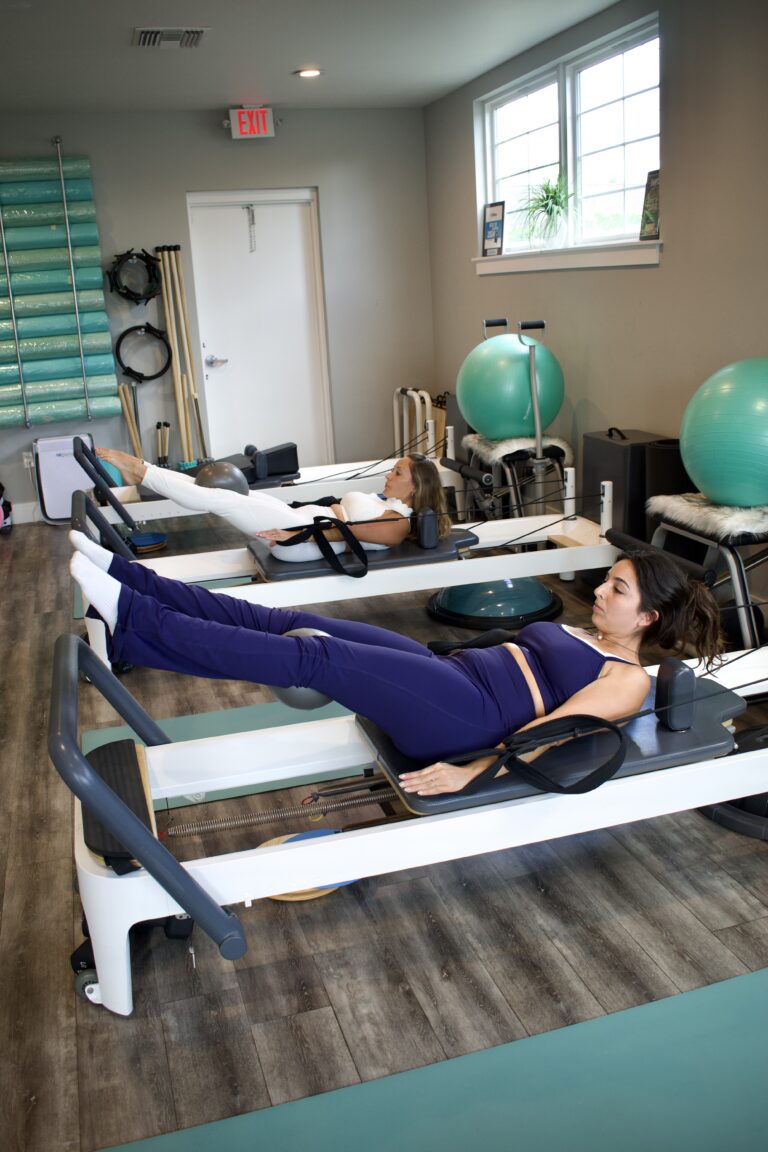
Pilates is one option worth exploring. Its focus on controlled movement, breathing, mobility, and strength makes it adaptable to different energy levels and fitness needs.
But first, let us look at what happens during the menstrual cycle and how it can influence your approach to exercise.
Understanding the Four Phases of the Menstrual Cycle
The menstrual cycle is a natural process controlled by hormones, particularly oestrogen and progesterone. These hormones help regulate ovulation and prepare the uterus for a possible pregnancy.
A cycle is counted from the first day of one period to the first day of the next. Although a 28-day cycle is often used as an example, cycle lengths vary from person to person.
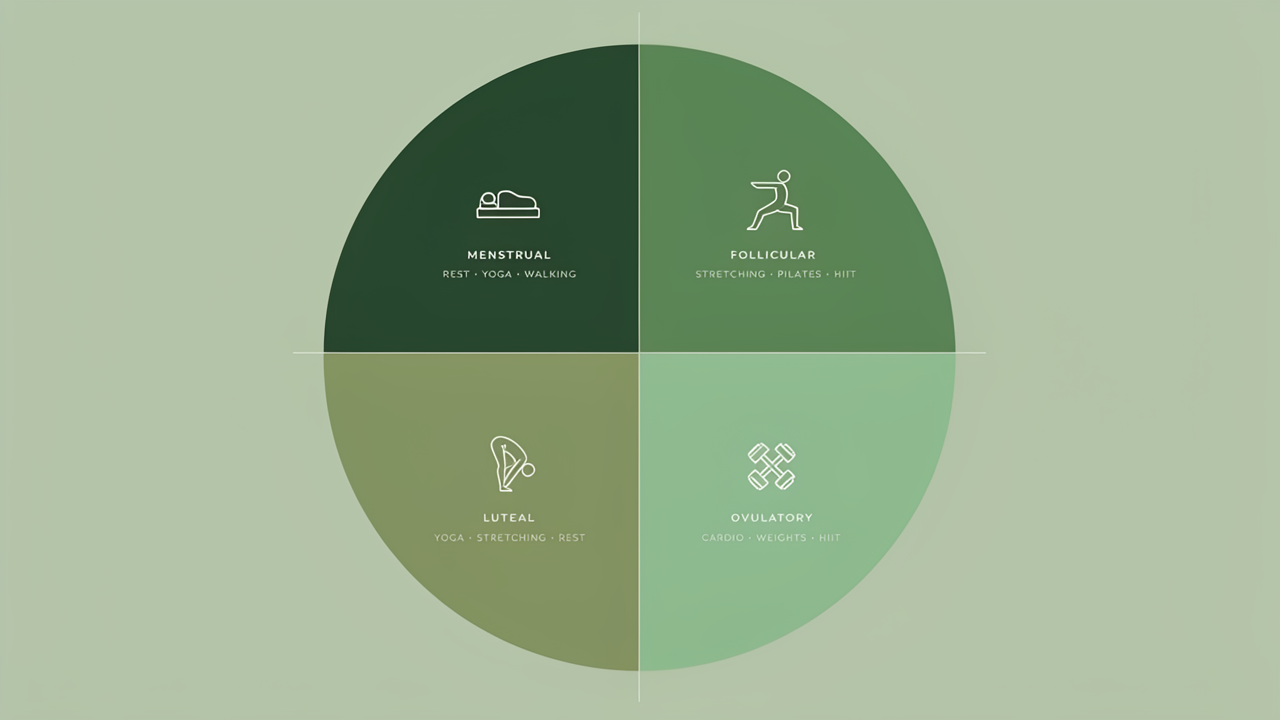
The cycle has four commonly recognised phases: menstruation, the follicular phase, ovulation, and the luteal phase. Each involves hormonal changes, although the physical and emotional effects vary between individuals.
1. The Menstrual Phase: When Your Period Begins
The menstrual phase begins on the first day of your period. If pregnancy has not occurred, the uterus sheds its lining, resulting in menstrual bleeding.
Oestrogen and progesterone levels are relatively low at this stage. You may experience menstrual cramps, lower back pain, headaches, bloating, or fatigue. Some people also notice changes in mood or concentration.
What to expect: You may feel comfortable exercising as usual, or you may prefer gentler movement and additional recovery time. Both are reasonable responses.
2. The Follicular Phase: Building Energy and Momentum
The follicular phase begins on the first day of menstruation and continues until ovulation. This means it overlaps with the menstrual phase at the beginning of the cycle.
During this phase, the brain signals the ovaries to develop follicles, one of which will usually release an egg. Oestrogen levels generally rise as the follicle develops, helping the uterine lining grow again.
As your period ends, you may notice that your energy, motivation, and general comfort improve. However, these changes are not guaranteed.
What to expect: If you feel energised, this can be a good time to focus on strength, progress your Pilates exercises, or try a new movement challenge.
3. The Ovulatory Phase: When an Egg Is Released
Ovulation occurs when an ovary releases an egg. It often happens around the middle of the cycle, but the exact timing depends on your individual cycle length.
Oestrogen rises before ovulation, and a surge in luteinising hormone triggers the release of the egg. Some people notice changes such as clearer cervical mucus, increased sexual desire, or mild discomfort on one side of the lower abdomen.
You may also feel energetic around ovulation, but there is no guarantee of improved strength or performance.
What to expect: If you feel good and have recovered well from previous sessions, you can continue with your regular training or try a more challenging workout.
4. The Luteal Phase: Preparing for the Next Period
The luteal phase begins after ovulation and continues until the next period starts.
During this phase, progesterone rises to help prepare the uterine lining for a possible pregnancy. If pregnancy does not occur, progesterone and oestrogen levels fall towards the end of the phase, and menstruation begins.
Some people feel relatively normal during the early luteal phase. Others experience premenstrual syndrome (PMS), which may include bloating, breast tenderness, fatigue, headaches, irritability, changes in appetite, or disrupted sleep.
What to expect: Pay attention to your energy, sleep, and symptoms. Continue strength training if it feels manageable, or choose a lighter Pilates session, walking, or mobility work when you need a gentler approach.
How to Navigate Exercise During the Menstrual Cycle
Understanding your cycle gives you useful information, but knowing how to apply it to your workouts is what makes the difference.
Cycle syncing is the practice of adjusting exercise and other lifestyle habits to the different phases of the menstrual cycle. It can encourage greater awareness of your body’s changing needs. However, research has not established that everyone needs a different workout plan for each phase or that cycle-based training consistently improves performance.
Instead of following strict rules, use the following guide as a starting point.
1. Menstrual Phase: Prioritise Comfort and Gentle Movement
Your period does not automatically mean you need to stop exercising. For many people, gentle movement can help ease menstrual discomfort, and regular exercise may help reduce PMS symptoms over time.
The key is to choose an activity that feels appropriate for your symptoms that day.
Exercises to consider:
- Gentle Pilates focused on breathing and controlled movement.
- Cat-Cow movements to encourage comfortable spinal mobility.
- Gentle hip mobility exercises and supported stretches.
- Walking at a comfortable pace.
- Light stretching for the lower back and hips.
A short, gentle Pilates session can help you stay connected to your movement routine without putting pressure on yourself to perform at your usual intensity.
If you experience significant cramps or fatigue, rest is also a valid choice. You do not need to push through severe discomfort to maintain consistency.
2. Follicular Phase: Build Strength and Explore New Challenges
As your period ends and the follicular phase progresses, you may feel ready to increase your workout intensity.
If your energy is improving, use this time to focus on building strength, refining technique, or gradually increasing the challenge of familiar exercises.
Exercises to consider:
- Reformer Pilates with an appropriate resistance level.
- Mat Pilates focused on core strength and stability.
- Strength training with controlled progression.
- Pilates exercises that challenge balance and coordination.
- Moderate cardio, such as cycling, swimming, or brisk walking.
This phase can also be a useful time to set new fitness goals. You might work towards improving your control in a challenging movement or gradually increasing resistance.
Remember that progress depends on consistent training, adequate recovery, and appropriate exercise intensity, not on the phase of your cycle alone.
3. Ovulatory Phase: Make the Most of Your Energy
If you feel strong and well-rested around ovulation, you can continue with your usual challenging workouts.
There is no need to increase your training intensity simply because you are ovulating. Instead, use your fitness goals and how you feel to guide your decisions.
Exercises to consider:
- More challenging Reformer Pilates sequences.
- Strength-focused Pilates sessions.
- Resistance training that matches your ability.
- Running, cycling, or other cardio you already enjoy.
- Balance and coordination exercises that challenge your control.
Focus on maintaining good technique and allowing enough recovery between demanding sessions.
Hormonal changes do not affect everyone in the same way. Some people feel stronger around ovulation, while others notice no change in performance.
4. Luteal Phase: Adapt Your Routine to Your Needs
The luteal phase can be particularly challenging for people who experience PMS. Changes in sleep, energy, mood, and physical comfort may make demanding workouts feel harder than usual.
You do not necessarily need to stop strength training or cardio. Instead, consider adjusting the duration or intensity of your sessions if your usual routine feels more difficult.
Exercises to consider:
- Moderate-intensity Pilates.
- Controlled core and stability exercises.
- Gentle spinal and hip mobility.
- Walking or low-impact cycling.
- Restorative movement and breathing exercises.
If your symptoms become more noticeable towards the end of this phase, shorter sessions may feel more manageable.
For example, you could replace a demanding 45-minute workout with a 20-minute Pilates session focused on mobility and control. You can return to your usual intensity when you feel ready.
The goal is to remain active in a way that supports your well-being, rather than treating every workout as a test of willpower.
Why Pilates Is Useful Throughout Your Menstrual Cycle
Pilates is built around controlled movement, breathing, alignment, balance, and strength. These principles make it possible to adapt exercises to different fitness levels and physical needs.
Whether you practise Mat Pilates or Reformer Pilates, you can adjust the intensity, range of movement, resistance, and duration of your session.
1. It Helps You Build Strength Consistently
Strength does not have to be built through high-intensity workouts alone. Pilates uses controlled movements to challenge muscles, including the core, glutes, back, and legs.
During the follicular or ovulatory phase, you may feel ready for more challenging exercises. During menstruation or the later luteal phase, you can choose a gentler session while continuing to practise good technique.
This flexibility can help you maintain a consistent movement habit without expecting your body to perform at the same level every day.
2. It Encourages Mobility and Body Awareness
Menstrual discomfort can affect how comfortable you feel moving. Gentle Pilates movements can help you explore comfortable ranges of motion, reduce muscular tension, and maintain mobility.
For example, gentle spinal movements and hip mobility exercises may feel useful when your lower back or hips feel tight.
Pilates also encourages you to pay attention to your breathing, posture, and movement quality. This awareness can help you recognise when an exercise feels manageable and when you may need to modify it.
Pilates is not a guaranteed treatment for menstrual pain, but it can be one part of a broader approach to movement and symptom management.
3. It Supports Relaxation and Stress Management
Stress, poor sleep, and fatigue can affect how you feel during your cycle. Pilates combines physical movement with controlled breathing and focused attention, which can provide an opportunity to slow down and manage everyday stress.
A gentle session may be particularly appealing when you feel tense or mentally drained.
However, Pilates should not be presented as a way to directly balance reproductive hormones or cure hormonal conditions. Its value lies in supporting movement, strength, body awareness, and general well-being.
4. It Helps You Stay Active When Energy Changes
One of the biggest advantages of Pilates is its adaptability.
A session can be challenging and strength-focused, or it can be slower and centred on mobility and control. You can also shorten a workout or modify individual exercises when needed.
For example:
- During menstruation, choose gentle movement if you are experiencing cramps.
- During the follicular phase, progress your strength exercises if you feel ready.
- Around ovulation, maintain your usual training or challenge yourself when appropriate.
- During the luteal phase, adjust your workout if PMS symptoms affect your energy or comfort.
This approach allows you to maintain a relationship with movement without following a rigid schedule.
Should You Change Your Workout Every Time Your Cycle Changes?
Not necessarily.
Although hormonal fluctuations are a normal part of the menstrual cycle, their effects on exercise performance vary considerably. Research into cycle-based training is still developing, and current evidence does not support a universal exercise prescription for each phase.
Some people notice clear patterns in their energy, mood, and recovery. Others experience very little variation. Factors such as fitness level, nutrition, sleep, stress, medications, and health conditions can also influence how you feel.
Rather than automatically changing your routine every week, start by observing your own experience.
Ask yourself:
- How is my energy today?
- Did I sleep well last night?
- Am I experiencing cramps, bloating, or other symptoms?
- Does my usual workout feel manageable?
- Would a shorter or gentler session help me feel better?
These questions can help you make decisions based on your actual needs instead of assumptions about what a particular phase should feel like.
You can still follow a structured training programme. The aim is to make sensible adjustments when necessary, not to create four completely separate workout plans.
Practical Tips for Exercising Throughout Your Cycle
Beyond choosing the right workout, a few simple habits can help you maintain a more comfortable and sustainable fitness routine.
Track Your Symptoms, Not Just Your Period Dates
A period-tracking app or simple journal can help you identify patterns over several cycles.
Alongside your period dates, record your energy levels, mood, sleep, cramps, and exercise performance. After a few months, you may notice that certain symptoms tend to occur at similar points in your cycle.
Use these observations as a guide, not a strict rulebook. Your patterns may change over time.
Eat Enough to Support Your Activity
Your body needs sufficient energy to support exercise, recovery, and normal physiological functions.
Include a variety of foods that provide carbohydrates, protein, healthy fats, vitamins, and minerals. Carbohydrates help fuel physical activity, while protein supports muscle repair and recovery.
Avoid drastically restricting food while maintaining a demanding exercise routine. Insufficient energy intake, especially when combined with excessive training, can disrupt menstrual function and affect bone health.
If you experience persistent fatigue, declining performance, or changes in your menstrual cycle, seek advice from a qualified healthcare professional.
Prioritise Sleep and Recovery
Sleep plays an important role in physical recovery, mood, and energy. Poor sleep can make exercise feel more challenging, regardless of where you are in your cycle.
Aim for a regular sleep routine and allow enough recovery between demanding sessions.
Rest days are not wasted days. They give your body time to recover and help make your training more sustainable.
Stay Hydrated
Hydration supports normal body function and exercise performance. Drink water regularly throughout the day, and adjust your intake according to your activity level, climate, and how much you sweat.
If bloating is a concern, avoid assuming that you need to drink less water. Staying adequately hydrated remains important.
Know When to Seek Medical Advice
Some menstrual discomfort is common, but symptoms that interfere with your daily life deserve attention.
Speak with a healthcare professional if you experience severe or worsening period pain, unusually heavy bleeding, persistent irregular periods, dizziness, or fatigue that affects your ability to function.
Severe cramps should not simply be accepted as something you have to endure. Conditions such as endometriosis and fibroids can cause significant menstrual symptoms and may require medical assessment.
Exercise can support general well-being, but it is not a substitute for appropriate medical care.
Frequently Asked Questions About Exercise During the Menstrual Cycle
Can I do Pilates during my period?
Yes. Many people can safely practise Pilates during menstruation. Choose the intensity and exercises that feel comfortable for you. Gentle movement may help ease discomfort, but you can rest if you are feeling unwell.
Is it better to exercise before or after my period?
Neither is universally better. Some people feel more energetic after their period, while others maintain similar energy levels throughout the month. Your fitness goals, symptoms, and recovery needs are more useful guides than a fixed cycle schedule.
Can Pilates help with period cramps?
Gentle movement may help some people manage menstrual discomfort. Regular exercise can also help reduce PMS symptoms for some individuals. However, Pilates is not a guaranteed treatment for cramps, and persistent or severe pain should be assessed by a healthcare professional.
Should I avoid intense exercise during the luteal phase?
No. You do not automatically need to avoid intense exercise during the luteal phase. If you feel well, have recovered properly, and can maintain good technique, you may continue your usual training. If fatigue, poor sleep, or PMS symptoms affect you, consider reducing the intensity.
Does cycle syncing improve fitness results?
Cycle syncing may help you become more aware of changes in your energy, symptoms, and recovery. However, evidence that matching specific workouts to each menstrual phase consistently improves strength or athletic performance remains limited. Consistent training, appropriate nutrition, and recovery remain important throughout the month.
What if I have irregular periods or use hormonal contraception?
Cycle tracking may be less predictable if your periods are irregular or you use hormonal contraception. Some contraceptives suppress ovulation or change bleeding patterns, so the usual four-phase model may not apply in the same way. You can still adapt your workouts according to your energy, symptoms, and recovery. Seek medical advice if you are concerned about irregular periods.
Find a Fitness Routine That Works With You
Your menstrual cycle is one part of your overall health, and understanding it can help you make more informed choices about exercise.
You may feel ready for a challenging workout one week and prefer gentler movement the next. Both experiences can fit into a balanced fitness routine.
The most useful approach to exercise during the menstrual cycle is to understand the four phases, recognise your personal patterns, and adjust your workouts when your body needs something different.
Pilates can be a valuable part of that approach. Its focus on strength, control, mobility, and body awareness allows you to adapt your sessions without losing sight of your fitness goals.
At Salty AF Pilates, we believe movement should meet you where you are. Whether you want to build strength, improve mobility, or simply reconnect with your body, you can find value in moving with intention.
Ready to move? Book a Pilates session and discover how mindful movement can support your strength, confidence, and overall well-being.
Disclaimer: This article is for general educational purposes only and is not a substitute for medical advice. Individual menstrual cycles and exercise needs vary. Consult a qualified healthcare professional about persistent symptoms, menstrual changes, or concerns about your exercise routine.